
Roof edge and eave ice clearing
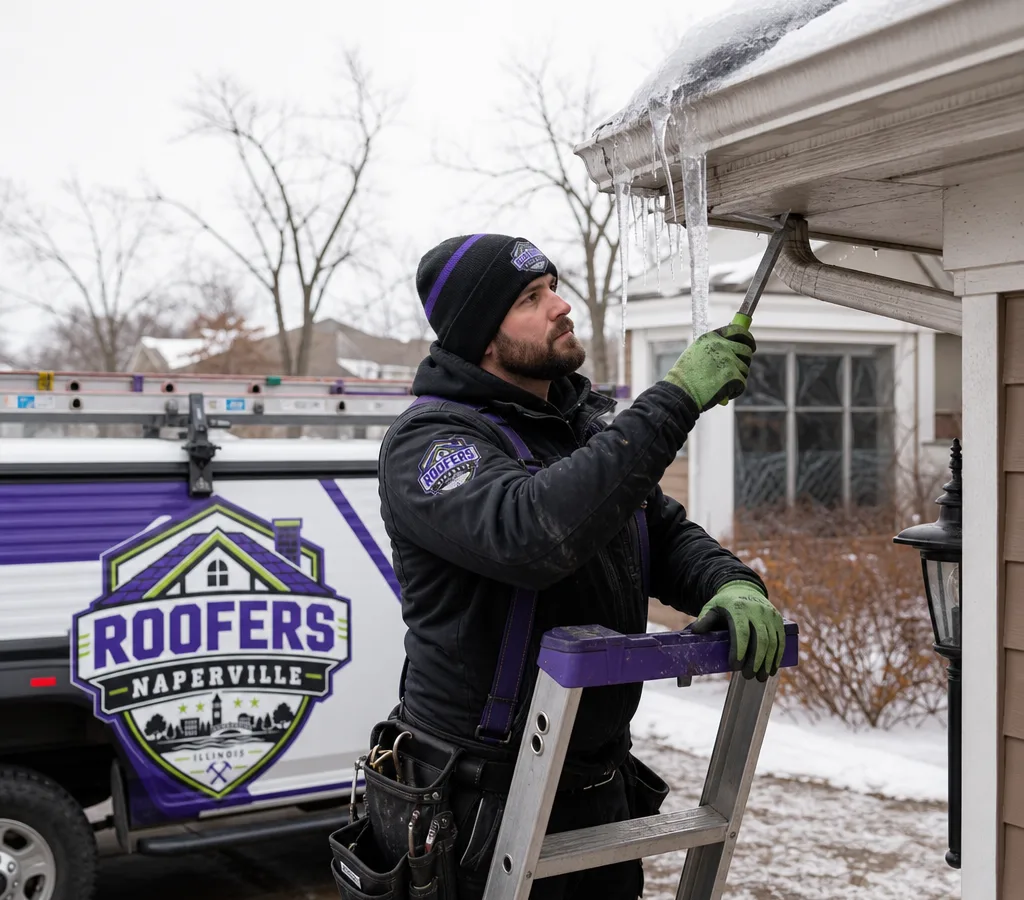
Targeted removal along the roofline opens drainage paths so meltwater can exit into gutters and downspouts instead of backing up under shingles.
Serving Naperville, Illinois & surrounding areas
Mon–Fri 8am–6pm · Sat 9am–2pm
Roof ice removal in Naperville, IL
Heavy ice at the eaves and in valleys can force water under shingles and back into your home. Get a fast roof check, safe ice clearing, and straightforward repair options that fit the roof you have.
Winter water intrusion needs prompt attention
Ice on a roof is rarely just a cosmetic problem. In Naperville winters, repeated freeze and thaw can turn snow at the eaves into a hard dam that traps meltwater. That water can work its way under shingles, soak roof decking, and show up as stains, drips, or bubbling paint inside.
Roofers Naperville handles naperville roofers ice situations with a simple goal: remove the ice in a way that does not damage your roof, then fix the weak points that let water back up in the first place. If you are seeing interior leaks, sagging gutters, cracking sounds near the soffit, or thick ridges of ice along the roof edge, it is worth having a roofer look before the next warm-up turns that ice into flowing water.
If you are also comparing contractors for broader work, start with Roofing for an overview of how we handle inspections, scopes, and scheduling in Naperville.
Immediate clearing and damage checks
Targeted removal along the roofline opens drainage paths so meltwater can exit into gutters and downspouts instead of backing up under shingles.
Ice often locks up valleys, dormers, and wall transitions. We inspect these areas for lifted shingles, exposed fasteners, and seams that need repair.
When safe access is available, we look for wet decking, frosted nail tips, and insulation staining to help pinpoint where water is entering and how far it has traveled.
Ice can break shingle tabs, loosen step flashing, and stress vent and pipe-boot seals. Repairs restore watertight layers without unnecessary tear-off.
A blocked outlet or frozen downspout can worsen ice at the edge. We check for obvious flow problems and recommend practical next steps when drainage is part of the cause.
Freeze-thaw pressure at the eaves
Ice dams form when snow melts on a warmer upper roof, runs down to a colder eave, then refreezes. Over a few cycles, the ridge thickens and becomes a barrier. Once that happens, the next melt has nowhere to go except sideways and up, and roofing materials are designed to shed water downhill, not hold it.
In Naperville, this is common during stretches where daytime temperatures rise above freezing and nights drop back down. Homes near the DuPage River and low-lying areas can also see persistent shaded snow that keeps the eaves colder longer. The underlying causes are usually a mix of attic heat loss, limited ventilation, and roof geometry, including long eaves, valleys, and complex tie-ins.
A good ice-removal plan respects the roof system. Aggressive chipping can break shingle granules, snap shingle edges, and dent metal flashing, which creates a bigger leak risk after the ice is gone. The right approach is controlled removal and targeted repairs where ice already forced water into vulnerable seams.
Safety, clearing, repair, prevention
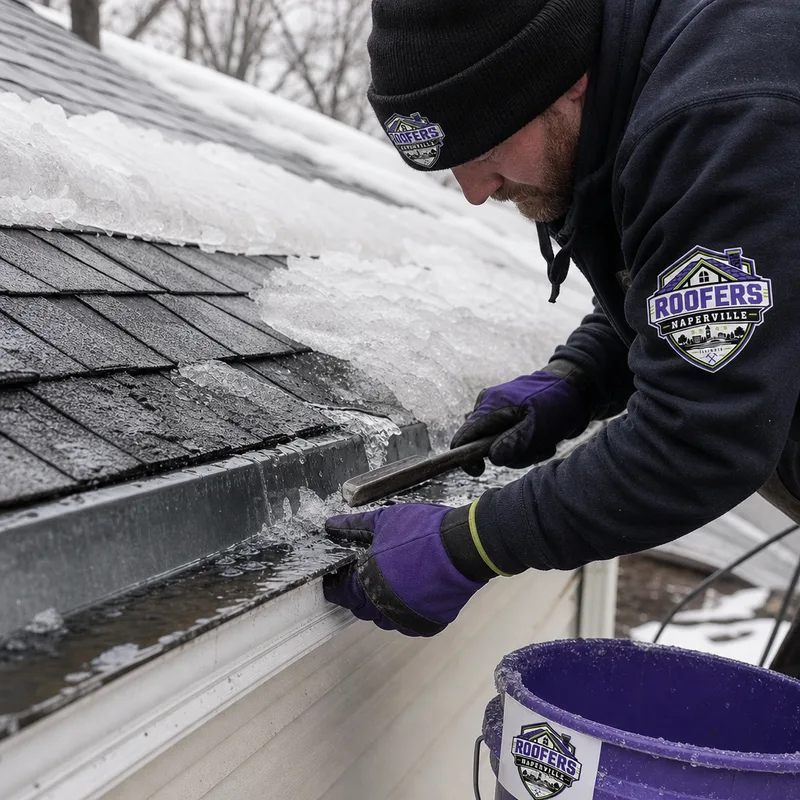
A controlled sequence protects the crew, restores drainage, and identifies damage before the next thaw.
Safety and access first. We evaluate roof pitch, ice thickness, and ladder placement. If conditions are unsafe, we explain alternatives and what can be done immediately to reduce active leaking risk.
Identify the problem areas. We focus on eaves, valleys, gutter outlets, and roof penetrations. If you have interior symptoms, we match them to exterior locations.
Controlled ice removal. We plan a clearing approach that protects shingles and flashing as much as possible and restores water flow without gouging everything back to bare shingle.
Repair damage found. If ice has lifted shingles, opened flashing joints, or compromised a vent boot, we repair those points so the next melt does not immediately reintroduce leaks.
Plan for the next freeze-thaw. We explain what drove the buildup and which ventilation, heat-loss, drainage, or roof-detail improvements can make the biggest difference.
Pricing depends on access and conditions
Roof ice removal in Naperville typically ranges from about $350 to $1,200+, depending on ice thickness, roof height and pitch, and how many edges or valleys need attention. A straightforward eave clearing on an accessible one-story roof is often at the lower end, while multi-story homes, complex rooflines, and active leak conditions can push pricing higher.
Final cost is driven by safe access needs, how long removal takes, whether protective measures are required, and whether roof damage repair is needed afterward. Exact pricing is confirmed after an on-site evaluation of the ice conditions and roof layout.
What winter pressure can expose
Ice expands, contracts, and pries at the roof edges and seams where water naturally concentrates.
Ice does not just sit there. As it expands and contracts, it can stress the parts of a roof that are meant to flex slightly, and it can pry at edges where water naturally tries to run.
Common issues after severe ice buildup include:
If you suspect the roof itself has reached the end of its service life, that is a different conversation than emergency ice work. A planned replacement may be appropriate, but this service focuses on getting you through winter conditions safely and protecting the home from water intrusion.
Book Your InspectionNaperville winter service experiences
“We had thick ice at the gutters and water marks starting on an upstairs ceiling. They cleared the problem areas without tearing up the shingles and showed us where the flashing had opened up. After the repair, the next warm day did not bring the leak back.”
“They were honest about what they could do safely that day and what needed to wait for better conditions. The plan made sense, and the follow-up repair work was neat and documented.”
Answers for active ice-dam concerns
Start with an on-site roof check
Tell us where the ice is building and whether you have any interior staining or drips. We will recommend the safest next step, provide a clear scope, and schedule ice removal and any needed roof repairs.